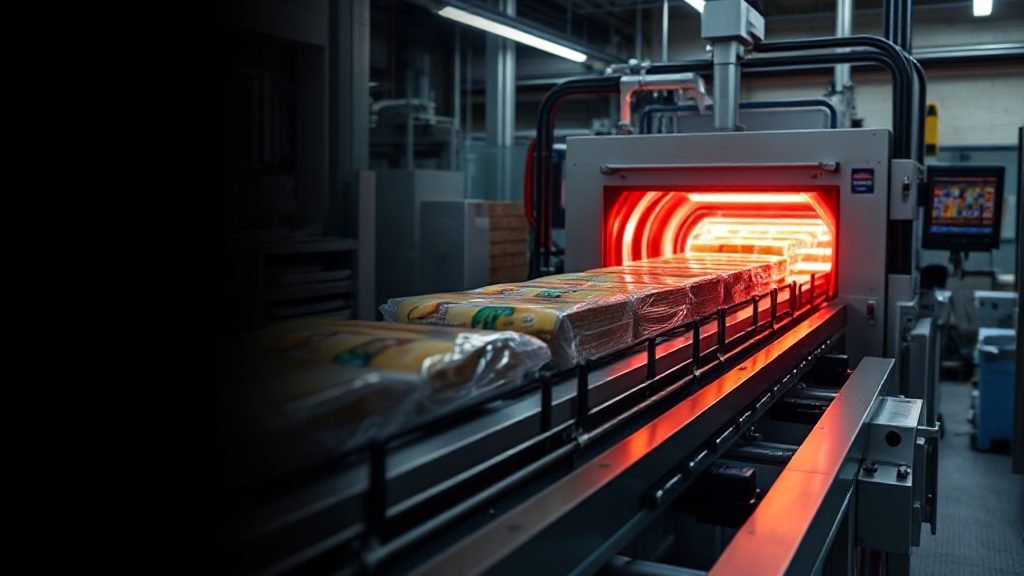
The Shrink Wrapping Machine Segment: A Concise Industry Briefing
The shrink wrapping machine segment sits at a stable but quietly shifting point in the industrial packaging market. Demand is no longer driven only by high-volume consumer goods lines; it now comes from mid-sized manufacturers, food processors, e-commerce fulfilment operations, and export-oriented units that need secure, retail-ready packs without overinvesting in automation. For industrial buyers, the segment matters because shrink wrapping sits at the intersection of product protection, logistics efficiency, and shelf presentation — and the equipment choices made today determine line speed, film cost, and maintenance load for years. This briefing summarises demand patterns, supply-side changes, and what buyers should watch in the current cycle.
Executive summary: what is shaping the segment now
The search intent behind most buyer queries is practical: organisations want to know what a Shrink wrapping machine does, which configuration fits their product, and what it costs to run. The short answer is that a shrink wrapping machine wraps a product in heat-shrink film, then passes it through a heat source so the film tightens around the item. That basic principle has not changed, but the machines around it have become more modular, more energy-conscious, and easier to integrate with existing conveyors and sealing equipment.
Three forces define the current segment. First, labour availability in production and dispatch areas continues to push buyers toward semi-automatic and automatic systems rather than manual wrapping stations. Second, film costs and sustainability pressure are making film efficiency a purchase criterion, not an afterthought. Third, the supply base has broadened: alongside large international OEMs, regional manufacturers now offer comparable mechanical designs with faster service response and lower landed cost. The practical result is a buyer’s market for standard configurations, but a more careful market for custom lines.
For planners, the segment is best read as mature in technology and fragmented in supply. That combination rewards buyers who specify clearly and penalises those who purchase on price alone without matching the machine to the product and the pack format.
Demand patterns: who is buying and why
Demand for shrink wrapping equipment tracks the packaging needs of three broad buyer groups, each with different priorities.
Food, beverage and household products
This remains the largest demand pool. Bottles, jars, cartons, and multipacks are wrapped for retail distribution, where the film provides tamper evidence, bundle integrity, and a printable surface for batch information. Buyers in this group care most about consistent tunnel temperature, tight seals, and throughput that matches filling lines. A poorly matched tunnel shows up quickly as loose packs, film scorching, or frequent jam clearance.
E-commerce and logistics operations
Fulfilment centres use shrink wrapping to unitise small parcels, protect products in transit, and reduce damage claims. Here the emphasis is on flexibility: machines must handle varying product sizes with short changeover times. Demand in this group has grown as more businesses ship directly to consumers and need a presentable, secure outer pack without a full carton.
Industrial and export manufacturers
Components, hardware, printed materials, and spare parts are wrapped for dust protection and pallet stability. Exporters often specify shrink wrapping because the pack survives long transit and humid conditions better than open cartons. This group tends to favour robust frames, simple controls, and locally available spares over advanced automation.
Across all three groups, the demand signal is consistent: buyers want machines sized to their real output, not their peak output. Oversized equipment raises energy use and film waste, while undersized equipment creates bottlenecks at dispatch. Right-sizing the machine to the actual shift pattern is the single most common factor separating satisfied buyers from disappointed ones.
Supply side: how the equipment and vendor landscape is changing
The supply side has moved in two directions at once: standardisation at the entry level and integration at the top end.
Machine configurations and components
Most machines in the market follow a common architecture: a sealing unit, a film delivery system, a conveyor, and a heat chamber. The differences lie in the details — sealing bar type, film tension control, tunnel airflow design, and control interface. Semi-automatic L-sealers suit low-volume operations, while automatic inline systems combine wrapping and shrinking in one pass. A shrink tunnel Machine is often the deciding component, because tunnel consistency determines pack quality more than the sealer does in continuous operation.
Component quality has improved across the segment. Digital temperature controllers, variable-speed conveyors, and better insulation are now common even in mid-priced equipment. The trade-off is that buyers must read specifications carefully: two machines can look identical but differ in heater capacity, conveyor load rating, and film compatibility.
Regional manufacturing and service depth
A significant supply-side shift is the rise of regional manufacturers serving domestic industrial buyers with shorter lead times and on-site service. For many production facilities, uptime matters more than brand prestige. An Automatic Shrink Wrapping machine that can be serviced within a day often delivers better lifetime value than a higher-specification import with a weeks-long parts pipeline. Buyers should therefore evaluate the vendor’s service footprint as seriously as the machine’s datasheet.
Film and sustainability pressure
Film suppliers are pushing thinner gauges and recycled-content options, and machine makers are responding with better tension control so thin films run without tearing. This is a genuine supply-side change: equipment that cannot handle thinner films will become more expensive to operate as film markets shift. Buyers should ask vendors to demonstrate the machine with the film they intend to use, not a showcase film.
Outlook: what buyers should plan for
The segment outlook is steady rather than dramatic. Replacement demand from ageing equipment will likely exceed new-capacity demand in mature markets, while emerging industrial clusters continue to add first-time automation. Three planning points follow from this.
First, expect automation to arrive in stages. Many facilities begin with a semi-automatic sealer and add a tunnel, then upgrade to a fully inline system as volumes justify it. Buying equipment that can be extended avoids a full repurchase later. Second, energy and film efficiency will increasingly appear in purchase calculations, so request power consumption and film usage data during evaluation. Third, serviceability should be treated as a specification: ask for spare parts lists, response times, and operator training as part of the quotation.
Common mistakes persist across the segment. Buyers compare headline prices without comparing included features. They specify machines for peak season output. They neglect to test their actual product and film combination. They underestimate floor space and ventilation needs for the heat tunnel. Each of these errors is avoidable with a structured trial and a clear specification sheet.
In summary, the shrink wrapping machine segment rewards informed buyers. Technology is mature, supply is competitive, and the difference between a good and a poor installation lies in matching configuration, film, and service to the real production environment. Facilities that treat the purchase as a line-integration decision rather than a standalone equipment buy will capture the segment’s main benefits: protected products, efficient dispatch, and a pack that presents well in every channel.
Leave a Reply